I’ve been to Armenia twice since the end of the COVID lockdowns. I’ll go again. That’s not a travel brochure. It’s the reason I’m writing this at all.
My first visit was in 2022. The Second Nagorno-Karabakh War was already over. The final offensive had not happened yet. You could feel it in Yerevan without anyone announcing it or handing you a notice. I meant to go on to Stepanakert, but I fell ill. I also got overly cautious and didn’t go. A year later the city I never reached was emptied. Most of the enclave’s estimated 120,000 residents crossed into Armenia in late September 2023. Later, Yerevan recognized Azerbaijan’s claim to the whole of Karabakh. I still think about that unfinished trip. I am allowed to. So is anyone who bothers to look at a map that used to have an Armenian highland on it.
Beijing never recognized Artsakh. Of course it didn’t. The Chinese Communist Party has a single talking point on “separatism,” and it doesn’t change for Taiwan, Tibet, Xinjiang, or a Christian mountain republic in the Caucasus. When the guns stopped they didn’t talk about refugees. They talked about peace and connectivity. Those are corridor words. I’ve heard enough official propaganda in my life to know when a word is doing a job.
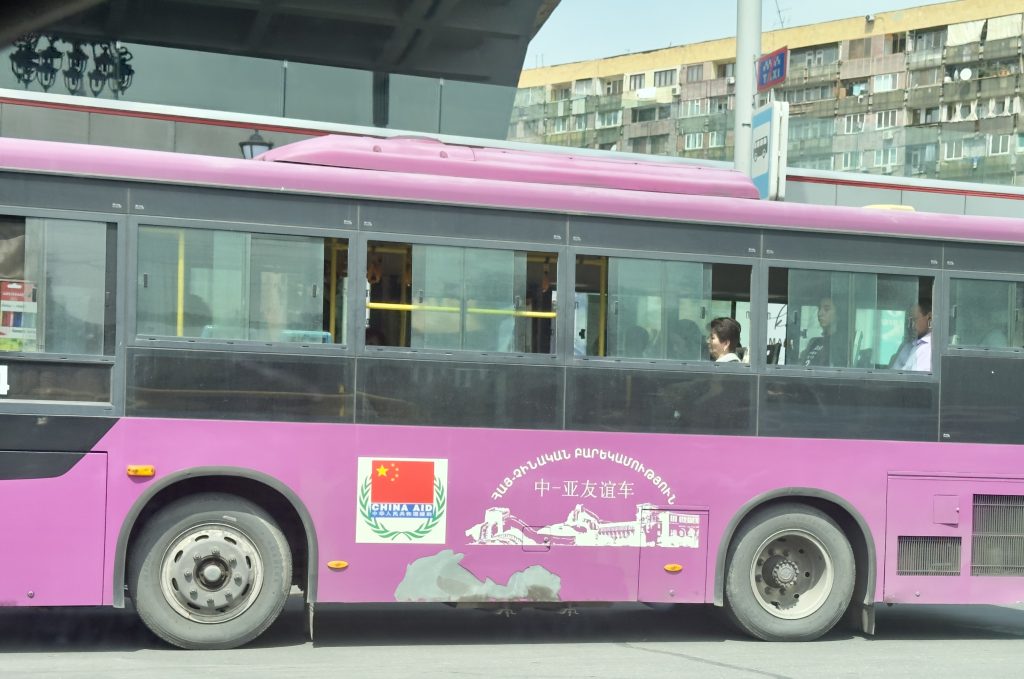
I went back in May and June of 2024. Stepanakert was already gone as an Armenian capital. What had appeared instead was emblazoned on the public transportation. A fuscia city bus rolled past with the official China Aid seal—the PRC flag in a wreath—and the words “Armenian–Chinese friendship” in Armenian over the Chinese line “China–Armenia friendship bus.” That is not a private advert. That is a state gift wearing livery. Mainland tour groups were no longer a rarity. The Party’s cheap method doesn’t require a railway or a highway. You paint partnership onto public transit and send large tour groups until people start treating the relationship as the weather.
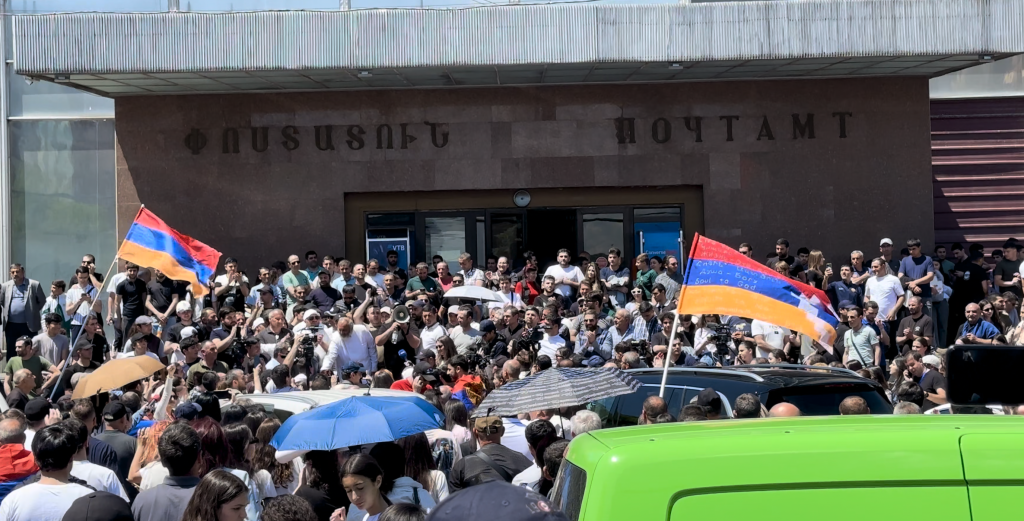
During that same trip, I found myself in the middle of the Sacred Struggle more than once.
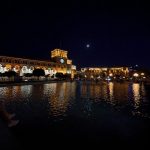
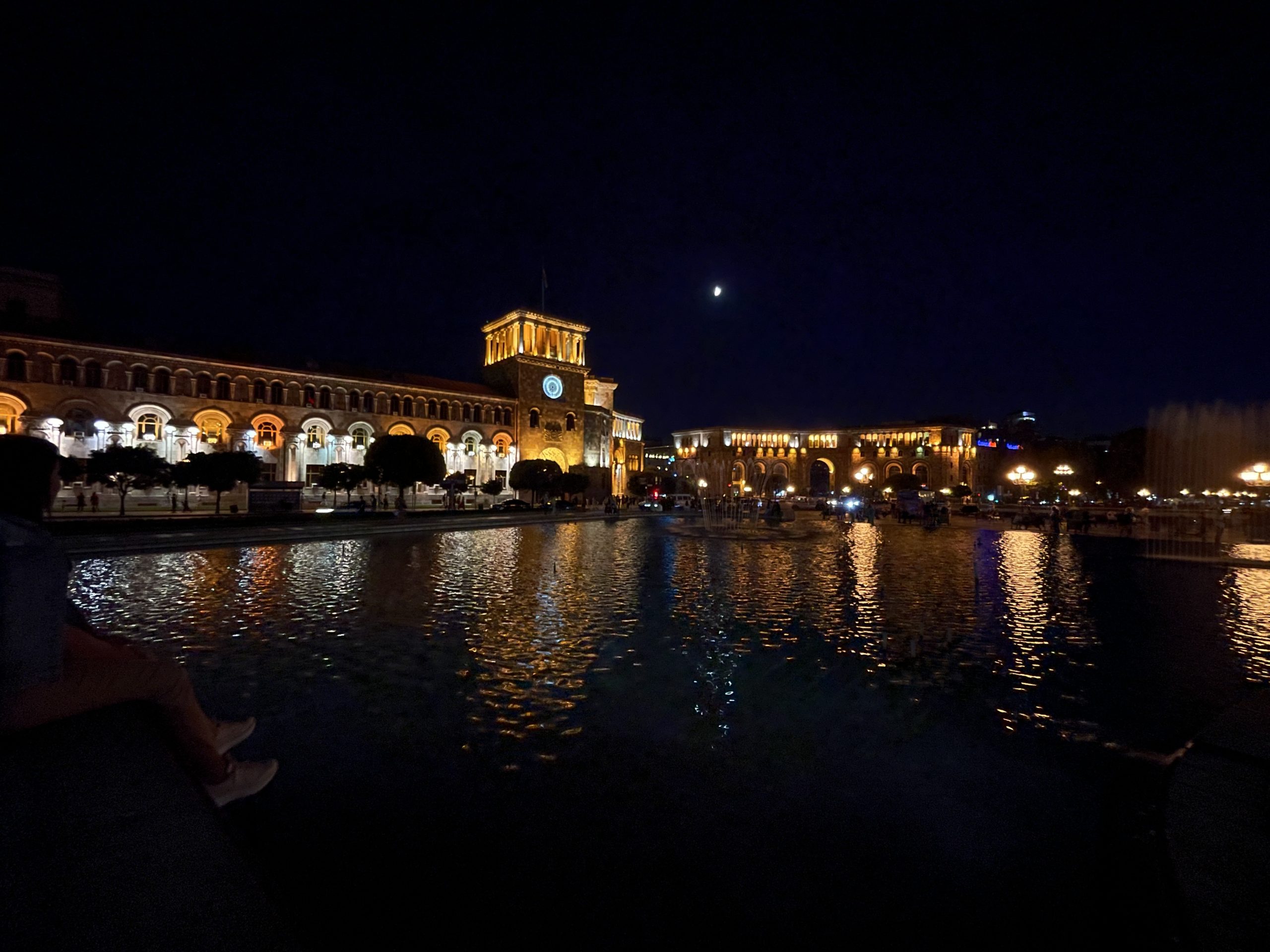
Archbishop Bagrat Galstanyan had walked a column down from Tavush after the government agreed to hand four border villages to Azerbaijan. May 10 was their second day in the capital with marches, students told to skip class, another night in Republic Square, and the demand that Nikol Pashinyan resign. I won’t dress it up. It was something to behold. Not because crowds are magic, but because a small country that had just lost a homeland was arguing, in public, over whether the next “peace” was a settlement or another dismembering.
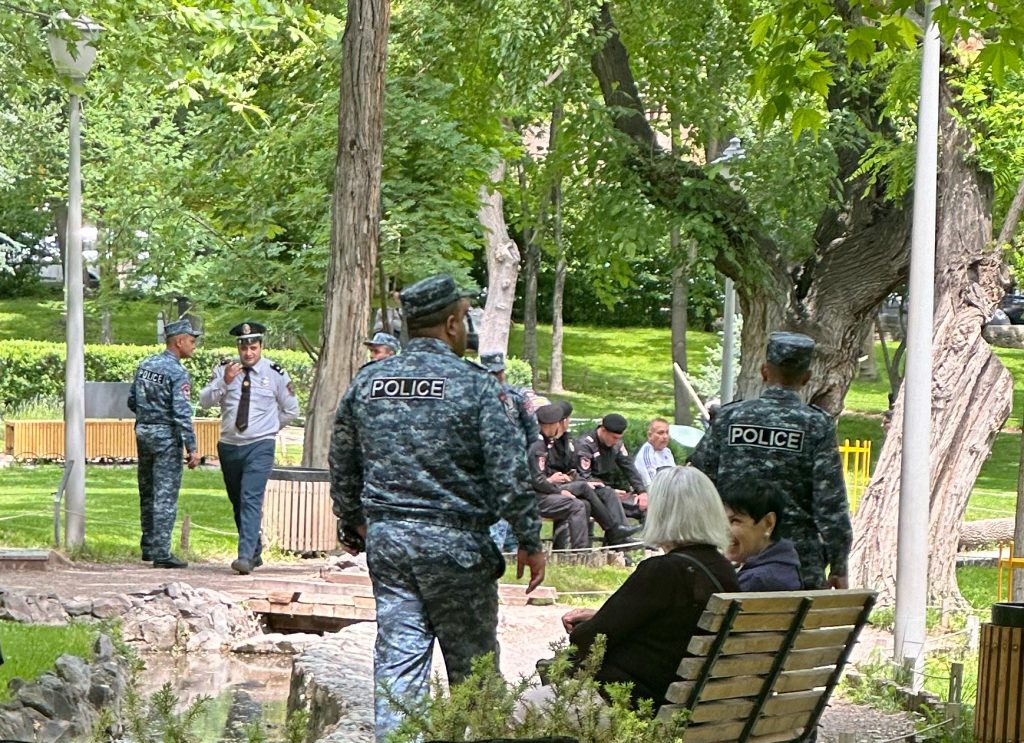
Eleven days later on May 21 at Lovers’ Park across from the National Assembly. A detail of Yerevan military police took the benches and pathways. A U.S. official party was being walked to the park restaurant. I was there. I couldn’t read the credentials from my table. I didn’t need to invent a scenario, however, that same day by the prime minister’s own office and later by the Foreign Ministry’s visitor list, CIA Deputy Director David Cohen was in Yerevan to see Pashinyan. CIA Director William Burns had already made a surprise trip in July 2022. All of these events point to Yerevan being worked on in the open.
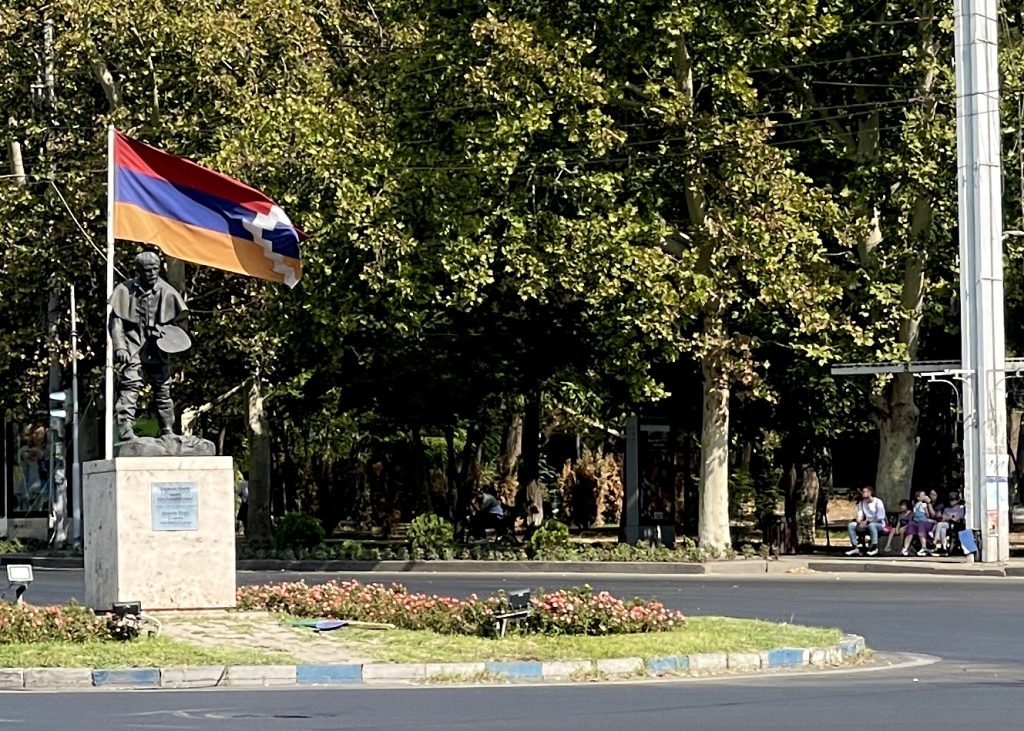
That is the part the communiqués leave out. Armenia isn’t a blank slate waiting for a Belt and Road sticker. Armenia has a culture, a long-lived history of resilience, and a faith that is older than the Edict of Thessalonica.
On April 23, 2025, in Beijing, Xi hosted Ilham Aliyev and the two sides signed a joint statement establishing a comprehensive strategic partnership. China would support Baku’s sovereignty and territorial integrity and fight the “three forces”: terrorism, extremism, and separatism. That last word is not a Caucasus courtesy. It is Beijing’s own doctrine, exported. For Aliyev it blesses his moves in 2023.
On August 31, 2025, in Tianjin, Xi and Pashinyan announced a strategic partnership. It was a lower grade than Baku received four months earlier. The signed joint statement gives China’s “firm support” for Armenia’s independence, sovereignty, territorial integrity, and inviolability of borders. Armenian official readouts of Xi’s remarks used the stronger word “unconditionally.” Either way, the sentence can’t put a single family back in Stepanakert. It doesn’t tie Baku’s hands. It tells Armenians the remaining republic will not be carved up, while the better partnership stays with the winner.
Pashinyan is trying to finish a peace many Armenians still consider an amputation. The Armenian Apostolic Church is still one of the few institutions people actually trust. An MPG poll for Gallup International in Armenia, released in December 2025, put a positive view of the Church at 77.7 percent. The prime minister’s own numbers are dwindling.
His answer has been to treat the pulpit like a rival ministry: insults, arrests, and positioning based on coup talk the accused call fiction. And the fight has leaned toward Etchmiadzin itself. That sort of campaign usually lifts a church, not buries one. However, Beijing doesn’t need Pashinyan to be loved. It needs whoever sits in that chair to keep talking corridors. Tradition and faith are what Armenia still holds. The CCP has no use for that immune system except as folklore.
In 1999 Armenia bought Chinese WM-80 multiple-launch rockets. Armenia’s first major non-Russian system. After 2020 and 2023, Yerevan went looking for drones because Turkish and Azerbaijani unmanned systems had written the last two wars. At Armenia’s Independence Day parade on May 28, 2026, Chinese CH-4B strike drones and ASN-301 loitering munitions were displayed.
This was the first public confirmation of those systems in Armenian service, according to defense reports. Baku has displayed Chinese HQ-9-family air defenses and is taking JF-17 fighters from Pakistan—a joint Chinese-Pakistani aircraft. The CCP will sell to the side that already won the air and to the side trying to catch up. It will not fight for either of them. Don’t confuse an invoice with an ally.
What Beijing wants out of the wreckage is a road. After 2020 the argument shifted to the strip through Armenia’s Syunik that would tie western Azerbaijan to Nakhchivan. Baku says “Zangezur.” Armenians say “Syunik,” and they anticipate yet another amputation if the route has no Armenian checkpoints.
On August 8, 2025, at the White House, Pashinyan and Aliyev signed a joint declaration with President Trump as witness. Their foreign ministers initialed the text of a peace agreement still awaiting signature and ratification. The declaration commits Armenia to work with the United States on a framework for the “Trump Route for International Peace and Prosperity” (TRIPP) through Armenian territory. Karabakh’s status is no longer the live file. The corridor is.
The CCP has already tried to write itself onto that road. Armenia signed a Silk Road memo in 2015. No official Belt and Road corridor ever crossed those closed borders. The 2025 joint statement now lines Crossroads of Peace up with the Belt and Road. Officials in Yerevan say the visions “coincide.” If TRIPP works, Chinese cargo on the Middle Corridor gets another path toward Turkey and Europe. If Washington runs the company, the Party is a guest on an American lease. So Beijing smiles at “connectivity,” waits for contracts and standards, and keeps the deeper relationship with the country that already sits on the Caspian leg.
The rest is the usual package, and I won’t pretend it is mysterious. According to Armenia’s Foreign Ministry trade table, in 2025 the country exported about $764 million to China and imported about $1.88 billion of Chinese goods, by country of origin. Sinohydro built pieces of the North–South highway on other people’s loans. Yerevan joined the Asian Infrastructure Investment Bank. A Confucius Institute and a Chinese-funded friendship school in Yerevan teach the language and the gratitude. Hikvision, Dahua, Hytera, DJI—cameras and drones with a legal on-ramp back to the Party if Beijing asks. None of that rebuilds a church in Stepanakert. All of it puts Chinese vendors on the only geography still in play.
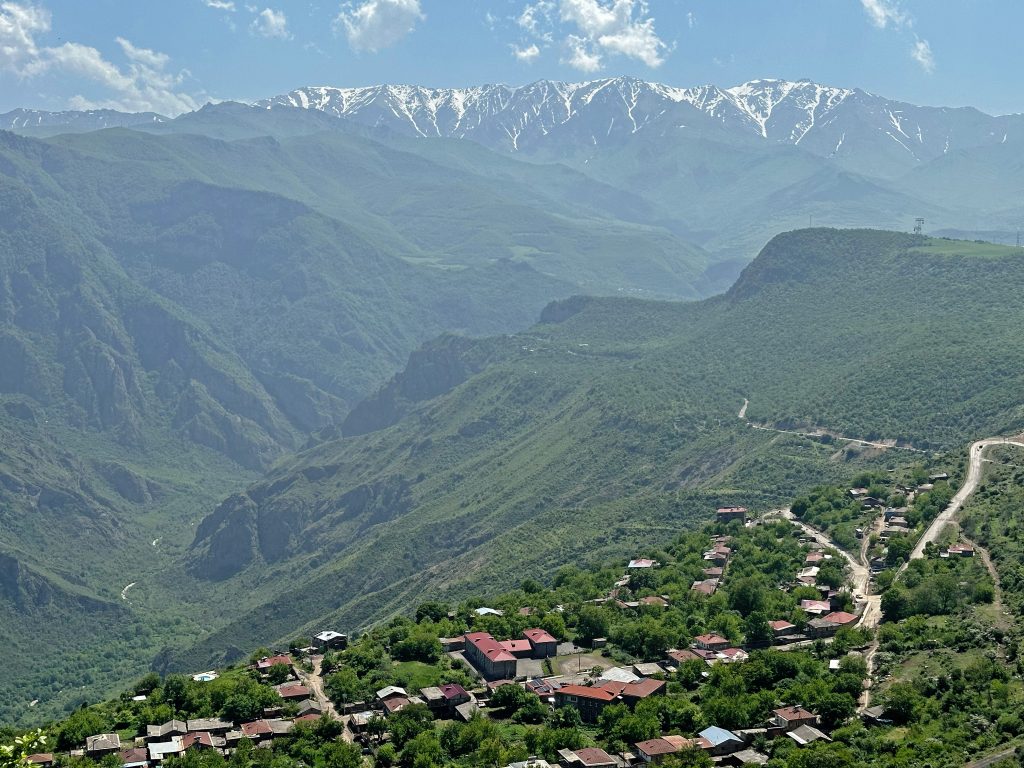
I’m not a diplomat. I’m a visitor who likes this country enough to return, and one who doesn’t outsource his eyes to a press release. Armenia is slowly losing its soul. You can ride a China Aid bus through Yerevan while Lovers’ Park fills with military police for an American intelligence visit and an archbishop fills a square over villages given up after Artsakh. The Party is not hiding. Washington is not hiding. The dead and the displaced are why the road is for sale.
The question isn’t whether Armenia “engages” China. Small states engage everyone. The question is who collects the toll, and whether a people and culture this old are going to be talked out of their own memory because someone in Tianjin or Washington found a better route to the sea.
Armenia is Armenia. If you were to ask me, Artsakh is Armenia as well. I will visit again.